
Why the Guys Who Last in the Trades Obsess Over the “Why,” Not Just the Work
Hard work gets a lot of credit. Deservedly so. But if you spend enough time around people who actually last in physical trades, you start to notice something interesting. The ones still standing after 10, 20, or 30 years are not the ones who worked the hardest in the beginning. They are the ones who learned why things work before they learned how fast they could work.
This came up recently in conversations I had with Tyler and Adam, two garage door technicians with Access Garage Door, who have seen a lot of careers start strong and end early. Different backgrounds, different stages in their careers, but the same underlying lesson kept surfacing. Skill matters. Strength helps. But understanding what you are dealing with and respecting it is what keeps you employed long term.
Garage doors might sound like a narrow example, but they are a perfect lens for understanding work ethic in the real world. They look simple. They are not. And they punish overconfidence fast.
The Hidden Risk of “I’ve Got This”
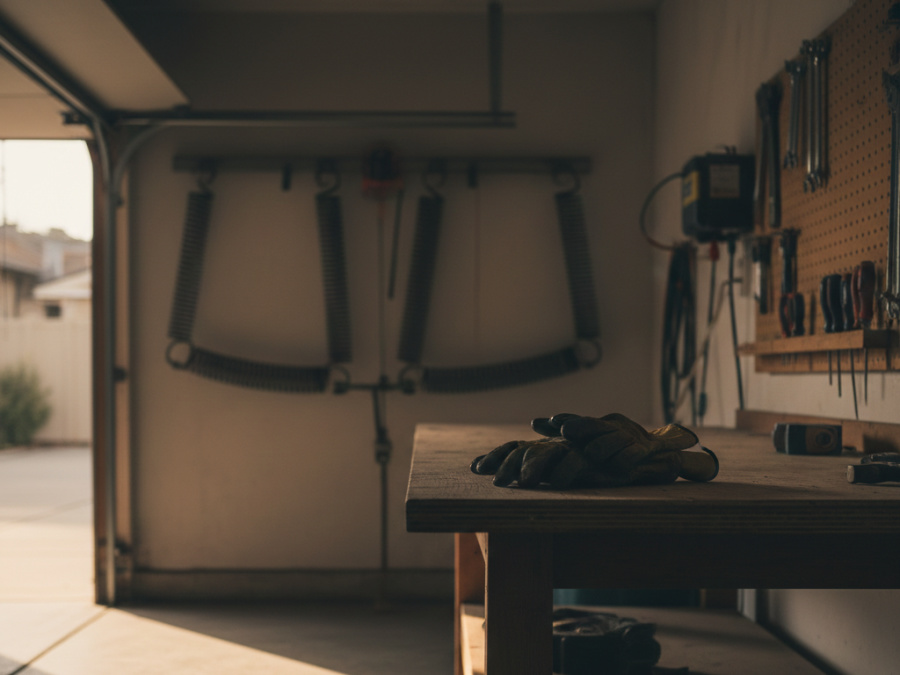
Most people outside the trades look at a garage door and see a panel that goes up and down. People inside the trade see stored energy, tension, and systems that can hurt you badly if you misjudge them.
Springs, in particular, do the heavy lifting. When they fail, things happen quickly and violently. The door does not slowly ease down. Energy that was carefully balanced releases all at once. It is the kind of failure that does not give second chances.
What stood out in these conversations was not the horror stories, though there were plenty. It was how often injuries happen to people who are confident, capable, and mechanically inclined. The danger does not come from ignorance alone. It comes from familiarity breeding shortcuts.
The guys who last learn early that being able to do something is not the same as being able to do it safely, repeatedly, and for decades.
Why Longevity Beats Bravado
There is a stage early in many careers where toughness becomes part of identity. You take on harder jobs. You rush. You push through discomfort. You prove something to yourself and others.
That phase does not last forever.
At some point, the calculation changes. The question becomes less about whether you can do the work and more about whether you should be doing it that way. People who stay in the trades learn to pace themselves, protect their bodies, and slow down just enough to think.
This is not laziness. It is professionalism.
Experienced technicians talk about endurance the same way athletes do. You cannot sprint every day and expect to stay healthy. You have to manage effort, technique, and recovery. Asking questions, double-checking setups, and respecting systems is not weakness. It is how you stay employed.
Understanding Systems Is a Career Advantage
One theme that kept coming up was curiosity. Not just how to install something, but why it was designed that way. Why a spring is sized a certain way. Why certain systems are safer than others. Why newer technology exists in the first place.
People who chase the “why” become better faster, but more importantly, they make fewer catastrophic mistakes. They recognize warning signs earlier. They notice when something feels off. They avoid the kind of errors that do not just cost money, but cost health and careers.
This applies far beyond garage doors. Landscapers, mechanics, electricians, and anyone working with physical systems eventually learns the same lesson. Respect the forces involved or they will remind you why you should have.
The Cost of Learning the Hard Way
There is a myth in blue-collar culture that pain is a badge of honor. That scars mean experience. The reality is that most injuries are not heroic. They are preventable. They happen because someone assumed a task was routine when it was not.
The stories that stick are not the funny ones. They are the moments when a spouse answers the door because someone is in the hospital. When work stops not because of a lack of jobs, but because a body cannot keep up anymore.
Veterans in any trade will tell you the same thing quietly. They do not want you to learn everything the way they did.
What Separates a Job From a Career
A job rewards effort today. A career rewards judgment over time.
The people who turn physical work into long-term careers understand that safety, training, and asking for help are not obstacles to productivity. They are multipliers. They allow you to keep showing up, year after year, without burning out or breaking down.
Hard work matters. But smart work is what lets hard work compound.
Garage doors are just one example, but the lesson applies everywhere. Learn the systems. Respect the risks. And remember that the goal is not to finish today’s job at all costs. The goal is to still be doing this work years from now, healthy enough to enjoy the life it provides.
That is what real work ethic looks like when you zoom out.


